
Manufacturing
Inside the mill
Every step from bale to cone happens under one roof at Purura, Valuka, on 40,000 ring spindles and modern preparatory and winding machinery.
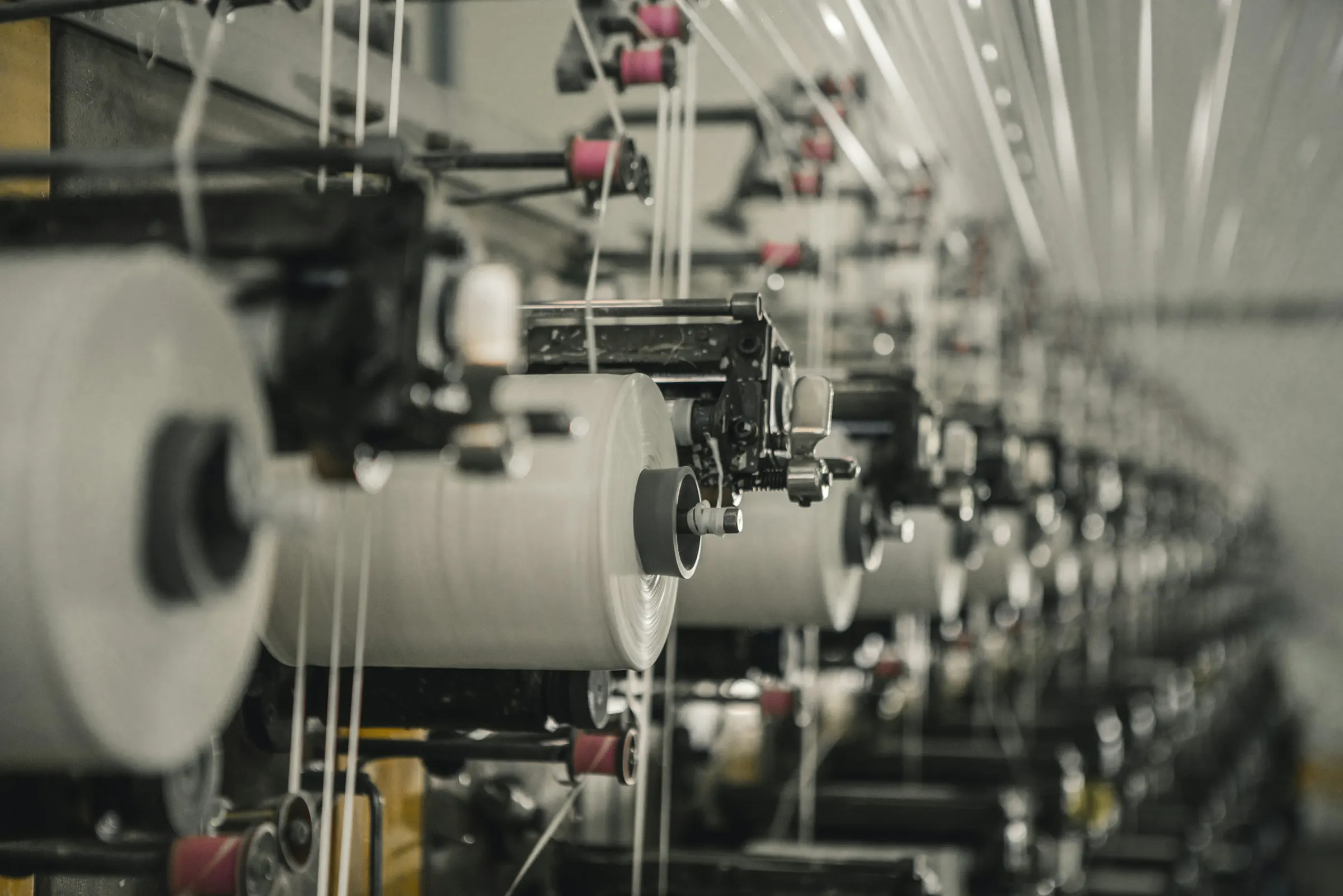
From bale to cone
Spinning turns loose, tangled cotton into a fine, even, strong thread. Each machine makes the strand thinner and more uniform than the last.
Step 01
Bale laydown and blow room
Cotton bales from different lots are laid down together so the mix stays consistent. Blow-room lines open the tightly pressed fibre into small tufts, blend it and beat out seed, leaf and dust.
Output: Open, clean fibre
Step 02
Carding
Card cylinders covered in fine wire separate the tufts into individual fibres, remove remaining trash and short fibres, and form a soft, untwisted rope called sliver. At GSL this is done on European-built high-production cards.
Output: Card sliver
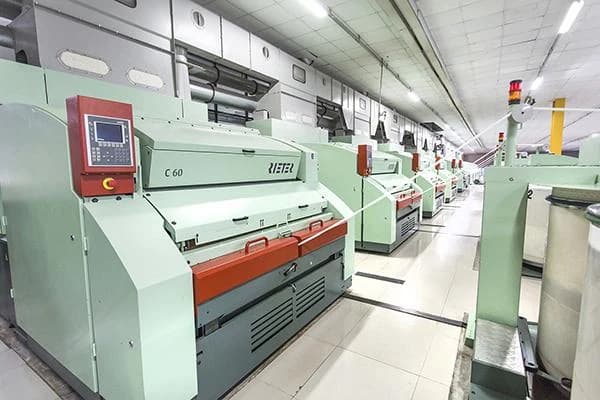
Step 03
Drawing
Draw frames combine several card slivers and stretch them back to a single sliver. Doubling and drafting average out thick and thin places and straighten the fibres, the foundation of even yarn.
Output: Even drawn sliver
Step 04
Simplex (roving)
Speed frames draft the sliver thinner still and insert a light twist, winding the roving onto bobbins that feed the ring frames.
Output: Roving bobbins
Step 05
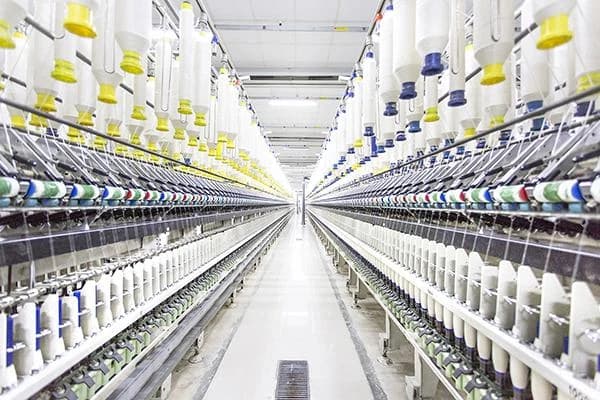
Ring spinning
Ring frames draft the roving to its final count and twist it into yarn. Our 40,000 spindles run in long, clean spinning halls, each frame carrying hundreds of spindles.
Output: Yarn on ring bobbins
Step 06
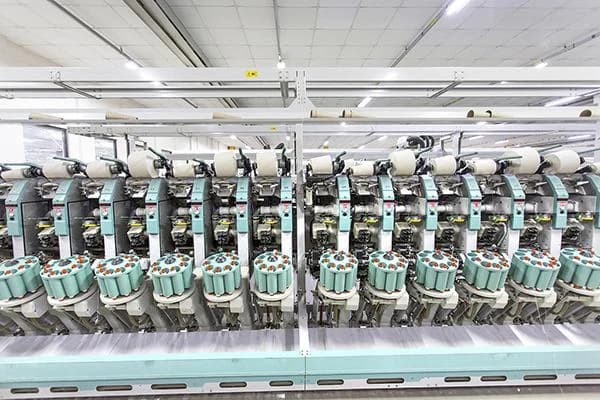
Autoconer winding
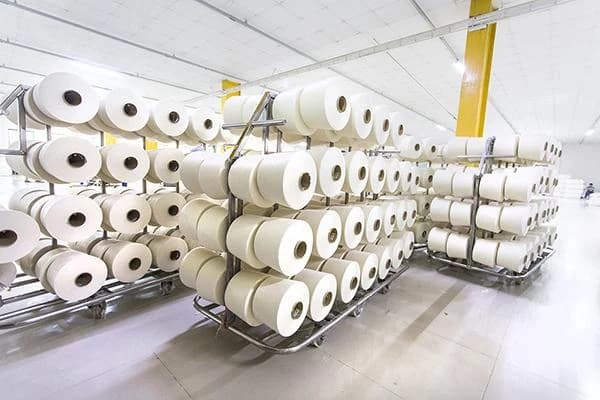
Automatic winders transfer yarn from small ring bobbins onto large cones, cutting out faults such as thick and thin places and joining the ends with knot-free splices.
Output: Clean, splice-joined cones
Step 07
Inspection and packing
Finished cones are checked, labelled by lot and count, and packed for dispatch to knitting and weaving mills at home and abroad.
Output: Packed cones, ready to ship
Quality
Built in at every stage
Faults are cheapest to fix where they start. We check the yarn as it moves through the mill, not just at the end.
- 01
Raw cotton
Bales are selected and mixed by lot so fibre length, strength and fineness stay consistent across a production run.
- 02
Preparation
Carding and drawing are set and monitored for sliver weight and evenness, because unevenness here carries through to the yarn.
- 03
Spinning
Count and twist are set per order on the ring frames and checked during production.
- 04
Winding
Yarn faults are cleared on the winders before the yarn reaches the cone.
- 05
Dispatch
Cones are inspected and labelled by lot so every shipment can be traced.
Around the mill
Row of carding machines at the Glory Spinning mill 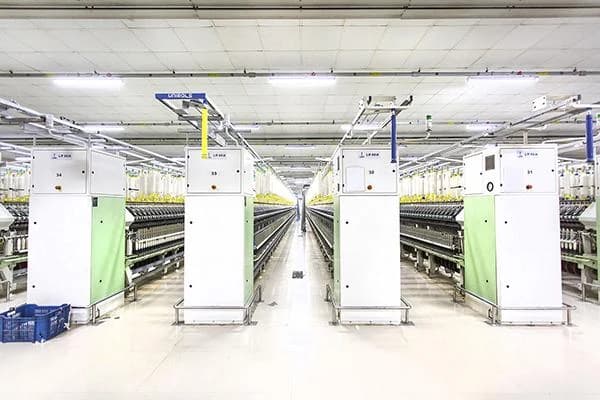
Ring frame heads in the Glory Spinning spinning hall 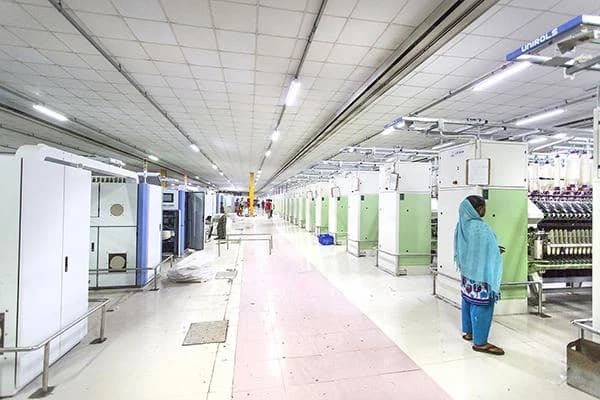
An operator checks a ring frame on the Glory Spinning mill floor Long aisle of ring spinning frames filled with cotton bobbins Automatic winding machines turning bobbins into cones Finished cones of cotton yarn on trolleys, ready for packing
Need carded cotton yarn?
Send us the count, end use, quantity and delivery date. Our sales team will come back with availability and a price.